Most factories and large buildings in Bangladesh take power from the utility at 11 kV or 33 kV. Before that power reaches the transformer, it passes through the HT switchgear. This guide explains what HT switchgear does, what a typical substation includes and what to check before you buy.
What is HT switchgear?
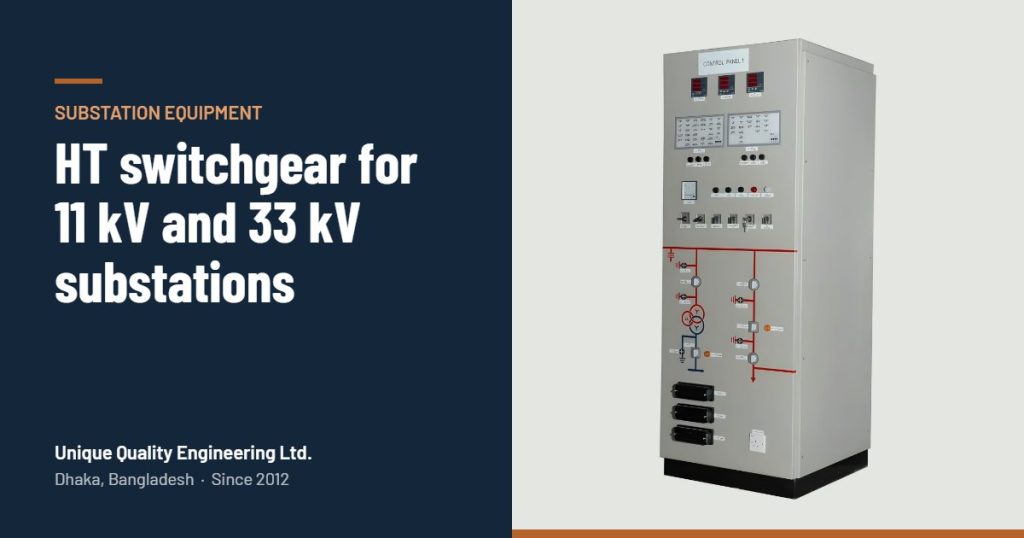
HT stands for High Tension. In our ebook we describe HT switchgear as any switchgear used to connect or disconnect part of a high-voltage power system. It is essential for the protection and safe operation, without interruption, of a high-voltage system — and it is directly linked to the quality of your electricity supply.
In practice, the HT panel lets you switch the incoming utility line on and off, isolates the transformer for maintenance and trips automatically when there is a fault, before the fault can damage the transformer or the line.
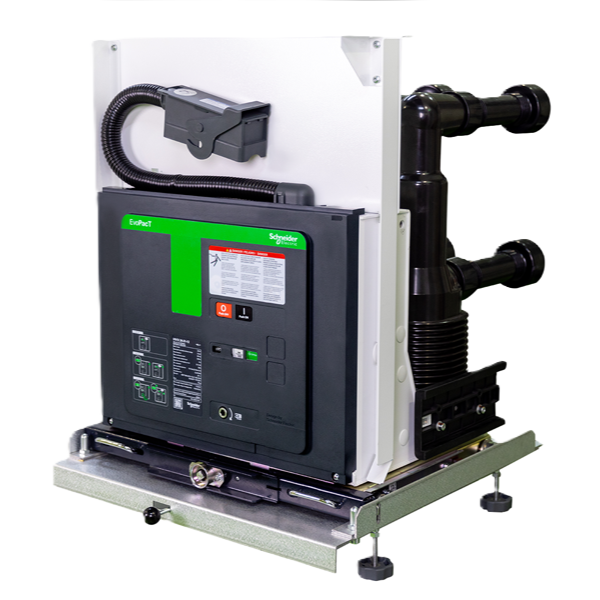
Why VCB panels are the standard choice
Modern HT panels in Bangladesh mostly use a Vacuum Circuit Breaker (VCB). The arc is interrupted inside a sealed vacuum bottle, so the breaker needs very little maintenance and has a long life. A typical HT panel includes:
- an incoming VCB or load-break switch for the utility line
- current and potential transformers (CT and PT) for metering and protection
- a protection relay such as an IDMT relay for overcurrent and earth fault
- an outgoing VCB feeding each transformer
- surge arresters and earthing switches for safe maintenance
A complete substation package
A substation is more than an HT panel. A typical factory substation includes:
- HT switchgear on the 11 kV or 33 kV side.
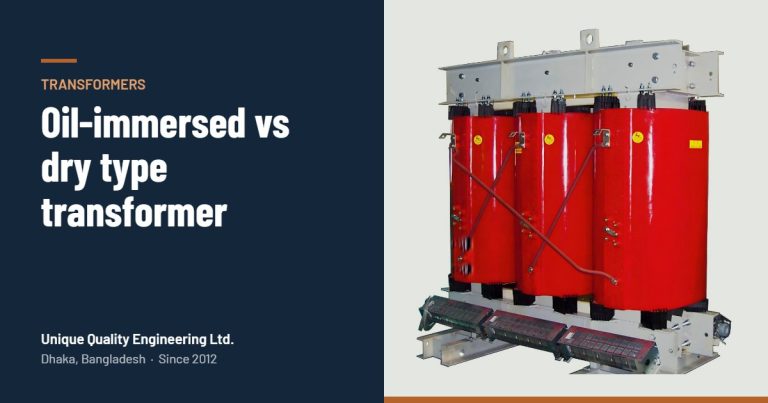
- A distribution transformer — oil-immersed or dry type.
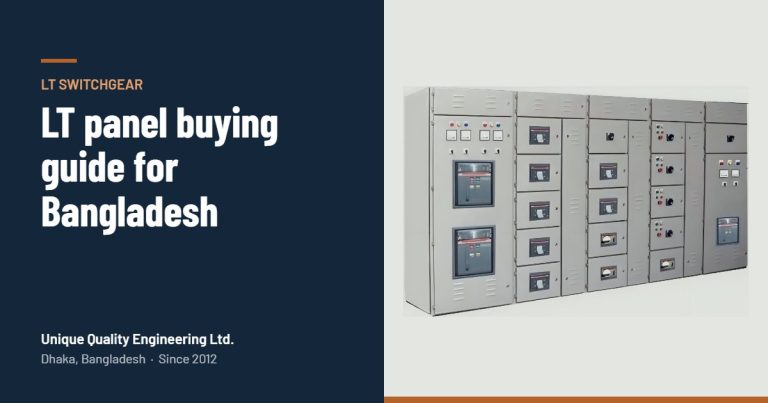
- An LT panel with the ACB incomer and outgoing feeders — see our LT panel guide.
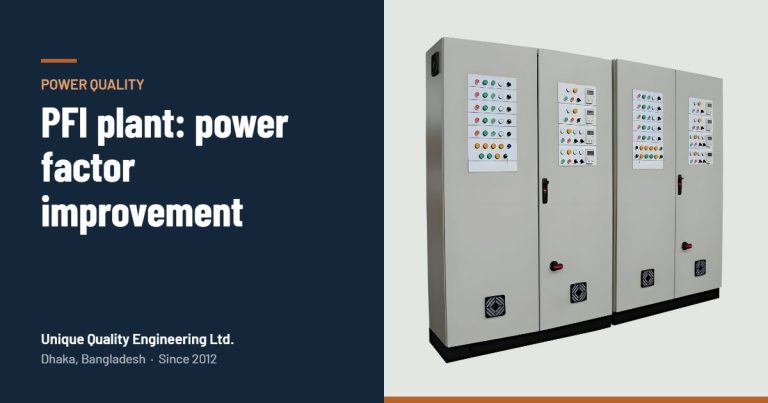
- A PFI plant to keep the power factor high — see power factor improvement.
- Busbar trunking or cables between the transformer and the LT panel.
Because the parts work together, it is safer and usually cheaper to have one team design and supply the whole package.
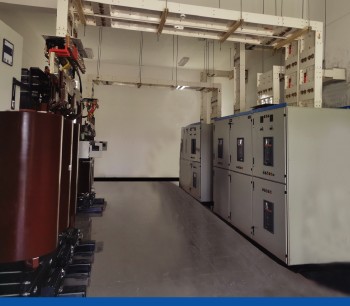
Installation, testing and commissioning
A substation must be tested before it is energised. Our team handles installation, testing and commissioning of substation equipment and busbar trunking systems. Typical checks include insulation resistance tests, breaker timing and operation, relay settings, CT and PT polarity, earthing resistance and a final energisation in coordination with the utility.
What to check before you buy
- The voltage class (11 kV or 33 kV) and the short-circuit rating match the utility supply.
- The relay settings are coordinated with the utility’s protection and with your LT panel.
- The panel follows IEC standards and the utility’s approval requirements.
- Spare parts and service are available locally.
Frequently asked questions
Does every factory need HT switchgear?
If you take a dedicated 11 kV or 33 kV supply with your own transformer, yes. Smaller buildings that take a 415 V supply from the utility only need an LT panel or MDB.
Can you replace an old oil circuit breaker with a VCB?
Yes. Retrofitting an old HT panel with a VCB is a common upgrade. Our engineers can inspect the panel and advise.
Talk to our substation team
Tell us your utility voltage, transformer size and site location. We will propose a complete, tested substation package. Request a quotation or see our HT switchgear page.
বাংলায় পড়ুন: এইচটি সুইচগিয়ার ও ভিসিবি প্যানেল: ১১ কেভি ও ৩৩ কেভি সাবস্টেশন গাইড