In a large factory or a high-rise building, running dozens of thick cables from the transformer to the LT panel and on to every floor is slow, messy and hard to change later. A busbar trunking system (BBT) solves this problem. This guide explains what busbar trunking is, the two main types and where each one is used in Bangladesh.
What is a busbar trunking system?
Our ebook describes a power busbar trunking system as a way of distributing electric power using copper or aluminium busbars inside suitable enclosures, with a good amount of protection to prevent damage from foreign bodies. Busbars are becoming irreplaceable simply because of their convenience and safety.
Instead of many parallel cables, the current flows through flat, insulated busbars inside a compact steel or aluminium housing. Sections bolt together like a pipeline.
Power busbar trunking
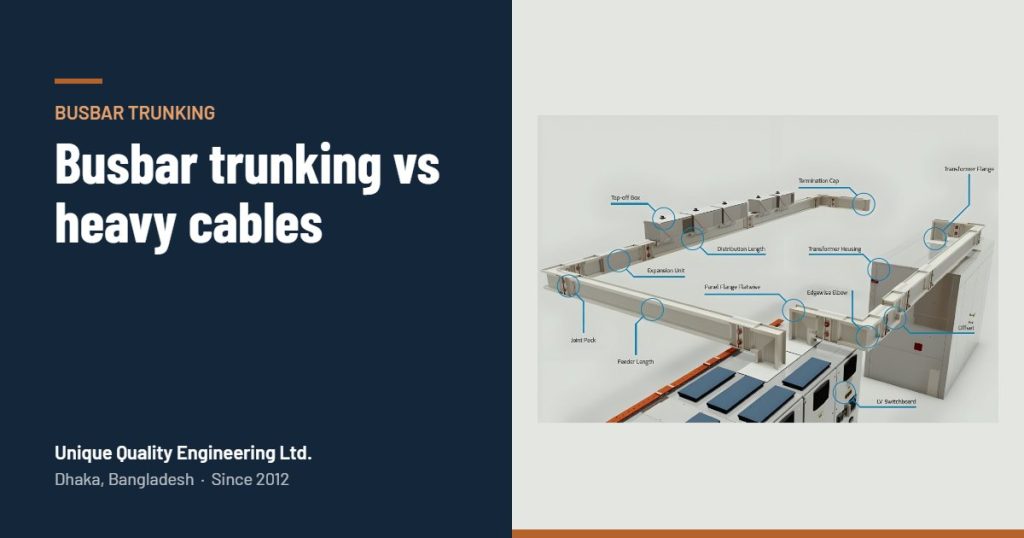
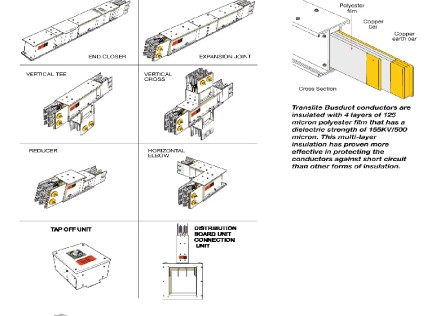
Power busbar is used for high currents — typically from the transformer to the LT panel and from the LT panel to large loads or to each floor of a building (a “riser”). Main components include:
- Feeder length: straight sections that carry power from one point to another.
- Distribution length: sections with outlets for plug-in tap-off boxes.
- Elbows and offsets: to follow the route around beams and walls.
- Expansion unit: absorbs thermal expansion on long runs.
- Transformer and panel flanges: connect directly to the transformer and the switchboard.
- Tap-off boxes: plug-in units with MCCBs or fuses to feed machines or floor DBs.
- End cap: closes the end of the run safely.
Lighting busbar trunking
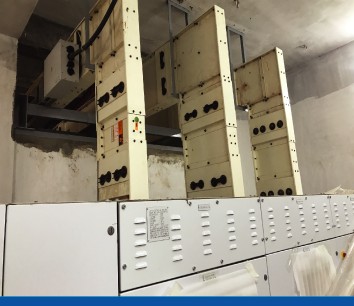
As our ebook notes, lighting busbar trunking provides electrical current to single-circuit lighting and emergency lighting circuits, and to machines that need low power, in factories, offices and parking garages. A single housing can carry 2, 3, 4, 5 or 6 conductors, for single-phase or three-phase use.
In RMG and textile factories, lighting busbar is hung above the production lines. Lights and small machines plug straight in, so changing the floor layout takes hours instead of days.
Busbar trunking vs cables
| Busbar trunking | Cables | |
|---|---|---|
| Installation | Fast, bolted sections | Slow pulling and termination |
| Space | Compact | Many cables need wide trays |
| Changes | Move or add tap-off boxes easily | Re-cabling needed |
| Fire safety | Low fire load | Large amount of insulation |
| Appearance | Neat and organised | Can become crowded |
| Initial cost | Higher for short runs | Lower for short, small loads |
For high currents and long runs, busbar trunking is usually the better long-term choice.
Where busbar trunking is used in Bangladesh
- transformer to LT panel connections in substations
- rising mains in high-rise commercial and residential buildings
- production floors in RMG, textile and spinning mills
- data centres, hospitals and shopping malls
Frequently asked questions
Copper or aluminium busbar?
Copper is more compact and has lower losses. Aluminium is lighter and lower in cost. Both are reliable when sized correctly.
Do you install and test busbar trunking?
Yes. We supply, install, test and commission busbar trunking systems. We are a business partner of Translite MF Busduct.
Get a busbar trunking quotation
Send us your drawings, current rating and route length. See our power busbar trunking and lighting busbar trunking pages, or request a quotation.
বাংলায় পড়ুন: বাসবার ট্রাংকিং সিস্টেম: মোটা ক্যাবলের নিরাপদ ও আধুনিক বিকল্প